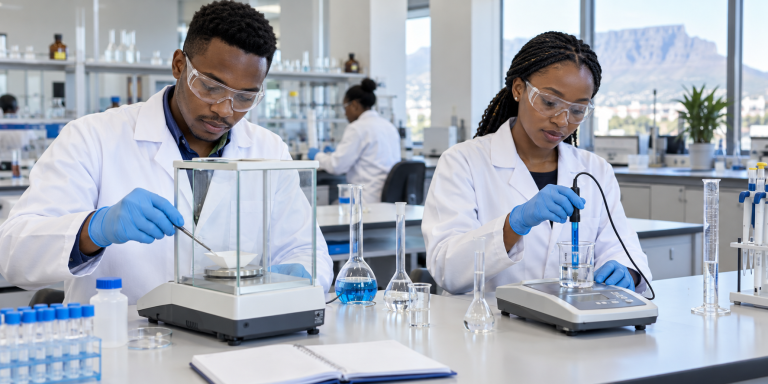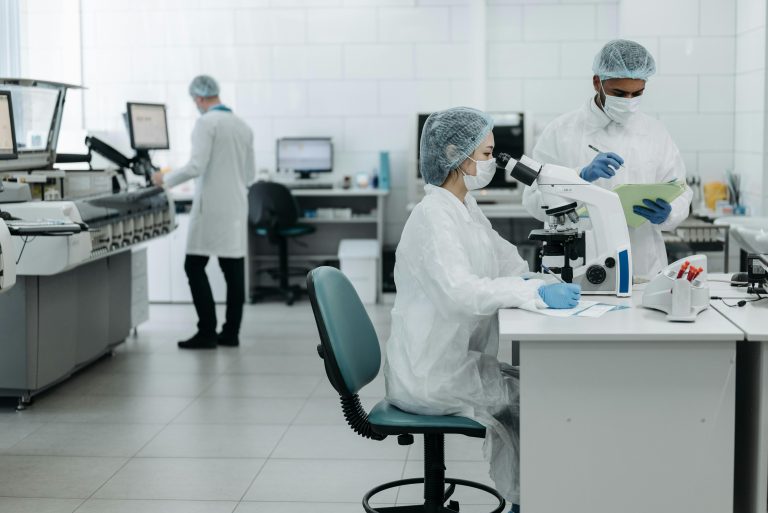
Laboratory ovens are used to dry, heat and condition samples under controlled temperature conditions. From removing moisture from glassware to preparing materials for testing, they support everyday work in research, education, manufacturing and quality control.
Choosing the right laboratory oven starts with understanding your application. Temperature range, airflow, chamber capacity and monitoring requirements all influence whether a unit will meet your laboratory’s needs.
This guide explains common laboratory oven uses and the key factors to consider when choosing one in South Africa.
What Is a Laboratory Oven?
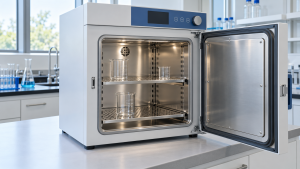
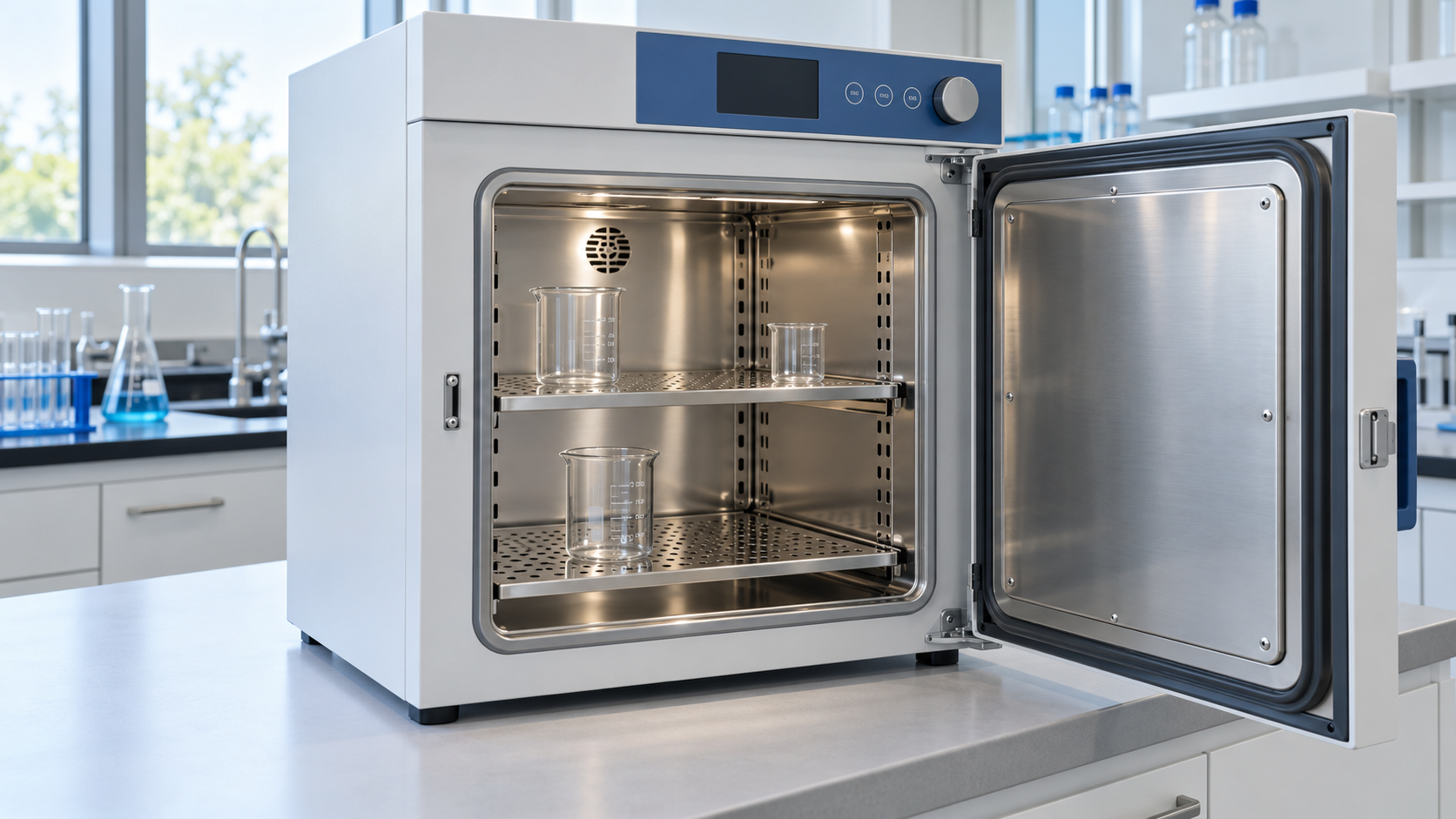
A laboratory oven is an insulated chamber that heats its contents to a selected temperature. Depending on its design, it circulates air naturally or uses a fan. Vacuum ovens operate at reduced pressure for applications requiring a different drying environment.
A laboratory oven should be selected against documented performance specifications and the requirements of your test method. A digital temperature display alone does not establish how accurately or evenly the entire chamber heats.
B&M Scientific lists laboratory ovens among its equipment offerings. Explore the B&M Scientific product catalogue for laboratory equipment and related supplies, then confirm your required model specifications with the team.
Common Uses of Laboratory Ovens
1. Drying Laboratory Glassware
Residual water can affect laboratory procedures. A drying oven can help remove moisture from suitable, cleaned glassware before reuse.
However, not all glassware and accessories can tolerate the same temperatures. Check the limits of each item, including caps, seals and fittings.
Volumetric glassware requires particular care. Follow the manufacturer’s cleaning and drying instructions to avoid compromising its calibrated volume. Allow heated glassware to cool safely before handling or use.
2. Preparing Samples for Analysis
Laboratory ovens are commonly used to dry suitable samples before further testing. Laboratories working with soil, raw materials and other solids may need controlled drying to achieve a defined sample condition.
The appropriate temperature and drying time depend on the analytical method. Excessive heat can change a sample’s properties, so follow the specified procedure rather than increasing the temperature simply to accelerate drying.
3. Determining Moisture Content
Some analytical methods determine moisture content by comparing a sample’s mass before and after a prescribed drying procedure.
Reliable results depend on consistent heating, accurate weighing and controlled handling between measurements.
Loss on drying can include substances other than water. If a sample contains volatile components, its mass loss should not automatically be interpreted as water content. Use a method appropriate to the material and the property being measured.
4. Curing and Thermal Conditioning
Suitable laboratory ovens can be used to cure selected resins, coatings and adhesives or condition materials before testing.
These applications may require a defined temperature profile, including controlled heating stages and holding periods.
Confirm that the oven and material are suitable for the process. Materials that release hazardous or flammable vapours require equipment specifically designed for those conditions.
5. Heat Ageing and Quality Control
Controlled heat exposure helps laboratories assess how materials or components respond to elevated temperatures.
Applications may include comparing production batches, evaluating material changes or investigating performance after a specified period of heating.
An ordinary laboratory oven controls temperature but does not necessarily control humidity. Tests requiring both temperature and relative humidity may need a climate chamber.
6. Dry Heat Sterilisation
Dry heat sterilisation is a specialised application that requires suitable equipment, heat-compatible materials and a validated cycle for the intended load.
Drying glassware does not establish sterility. If sterilisation is your objective, specify this when requesting equipment and follow the applicable validated procedure.
A general-purpose drying oven should not be assumed to replace a steriliser or autoclave.
Types of Laboratory Ovens
Understanding the differences between oven types can help you choose equipment suited to your samples and procedures.
Natural Convection Ovens
Natural convection ovens, also called gravity convection ovens, rely on the movement of warm air without a circulation fan.
They can suit applications where gentle airflow matters, including some lightweight samples that could be disturbed by stronger air movement.
Check the manufacturer’s temperature uniformity and recovery specifications against your workload. Shelf placement and loading can affect how heat reaches the samples.
Forced Convection Ovens
Forced convection ovens use a fan to circulate heated air throughout the chamber.
They can be useful for routine drying and applications requiring efficient heat distribution. However, airflow may disturb powders or lightweight materials.
Where fan speed is adjustable, confirm that the available settings meet your procedure’s requirements.
Vacuum Ovens
Vacuum ovens dry samples under reduced pressure and may suit certain temperature-sensitive applications.
Choosing a vacuum oven also involves assessing its pump, pressure controls, seals and any required vapour handling equipment.
A vacuum oven is not automatically suitable for flammable solvents. Confirm the manufacturer’s permitted applications and the compatibility of the complete system before use.
Factors to Consider When Choosing a Laboratory Oven
1. Application and Temperature Range
Start by identifying what you will heat, the required operating temperature and the duration of each cycle.
Check both the minimum and maximum usable temperatures. Some ovens operate only a specified amount above room temperature.
If your method requires temperatures close to or below ambient conditions, another type of temperature-controlled chamber may be more appropriate.
Choose an oven that meets your current method requirements while accommodating foreseeable laboratory work.
2. Temperature Accuracy, Stability and Uniformity
These three terms describe different aspects of oven performance:
- Accuracy: How closely the measured temperature agrees with a reference temperature.
- Stability: How much the temperature varies over time at a particular location.
- Uniformity: How much the temperature differs between locations inside the chamber.
Ask for performance specifications at your intended operating temperature.
Also establish whether those specifications apply to an empty chamber or a representative load. For critical work, discuss calibration and temperature mapping requirements before purchasing.
3. Chamber Capacity and Usable Space
Chamber volume, usually expressed in litres, is only part of the capacity question.
Check the internal dimensions, shelf spacing, shelf load limits and the size of your largest containers.
Leave the clearances recommended by the manufacturer so samples do not obstruct airflow. An oven may physically accommodate your workload yet struggle to heat it consistently when tightly packed.
Choose sufficient usable space for your typical workload, with reasonable allowance for future demand.
4. Controls, Timers and Data Recording
For straightforward drying, a clear temperature controller and timer may be sufficient.
More complex applications may require programmable temperature ramps, multiple heating stages or automatic data logging.
Check how the timer operates. Does it start immediately, or only once the required temperature is reached?
Where records are needed, ask about data export, sensor connections and the information captured during each run.
5. Safety Features and Sample Compatibility
Review the oven’s over-temperature protection, alarms and response to sensor failure.
Establish whether its protective temperature control operates independently of the main controller.
Standard laboratory ovens should not be used for flammable materials or solvent-bearing samples unless explicitly approved for that purpose. Assess corrosive vapours and other sample hazards too.
The equipment must suit the material being heated and the manufacturer’s operating instructions.
6. Installation and Power Requirements
Before ordering, check the oven’s external dimensions, ventilation clearances and electrical requirements.
Confirm that your bench or floor can support its weight and that staff can load and unload it safely.
For South African laboratories planning around power interruptions, establish what happens when electricity returns. Automatic restart, programme recovery and alarm behaviour can affect whether a run remains valid.
Any backup power supply must be assessed against the oven’s electrical load.
7. Cleaning, Maintenance and Support
Consider how easily the oven can be cleaned, whether shelves are removable and which cleaning products are compatible with its chamber surfaces and seals.
Residues from previous runs can affect subsequent samples, making cleaning an important part of reliable operation.
Ask about warranty terms, replacement parts, servicing and calibration options. Confirm which services are included in the quotation and which require a separate arrangement.
8. Total Cost of Ownership
Compare more than the purchase price.
Include installation, electricity consumption, accessories, maintenance and any calibration or qualification work required by your laboratory.
A lower-cost unit may suit simple drying tasks, while a demanding analytical method may justify tighter temperature performance or more comprehensive documentation.
The right laboratory oven meets your application’s requirements at a sustainable operating cost.
What to Include When Requesting a Laboratory Oven Quote
Providing clear requirements helps a supplier identify suitable options. Include:
- Your application and the types of samples or materials involved.
- Required temperature range and cycle duration.
- Temperature accuracy, stability and uniformity requirements.
- Approximate workload, container dimensions and shelf loading needs.
- Requirements for vacuum operation, programming or data recording.
- Known sample hazards.
- Installation space and electrical constraints.
- Your budget, delivery location and required timeframe.
You can request a laboratory oven quote from B&M Scientific with these details to help the team understand your needs.
Frequently Asked Questions About Laboratory Ovens
What Is the Difference Between a Laboratory Oven and an Incubator?
A laboratory oven is generally selected for drying and heating. An incubator maintains conditions suitable for applications such as biological culture.
Their temperature ranges may overlap, but airflow, control performance and intended use can differ. Choose equipment according to your procedure.
Can a Laboratory Oven Dry All Types of Glassware?
No. Suitability depends on the glassware, its calibration, attached components and the proposed temperature.
Follow the manufacturer’s instructions, particularly for volumetric glassware and items with plastic fittings.
Is a Larger Laboratory Oven Always Better?
No. Choose a chamber that accommodates your workload with appropriate spacing.
Excess capacity can increase space requirements and cost without improving your process.
Can a Drying Oven Be Used for Sterilisation?
Only when the equipment is suitable for the intended sterilisation application and the cycle has been validated for the load.
A routine drying cycle does not demonstrate that items are sterile.
How Much Does a Laboratory Oven Cost in South Africa?
Pricing depends on chamber capacity, oven type, temperature performance, controls and accessories.
Request a quotation based on your application so you can compare suitable configurations.
Find a Laboratory Oven Suited to Your Work
Choosing a laboratory oven requires a clear understanding of your methods, samples and daily workload. Compare documented performance, assess safety requirements and confirm installation needs before purchasing.
B&M Scientific supplies laboratory equipment and related scientific supplies. Browse the current product catalogue or enquire now about a laboratory oven.
For assistance, contact B&M Scientific on 021 933 8132 or email customercare@bmscientific.co.za.