
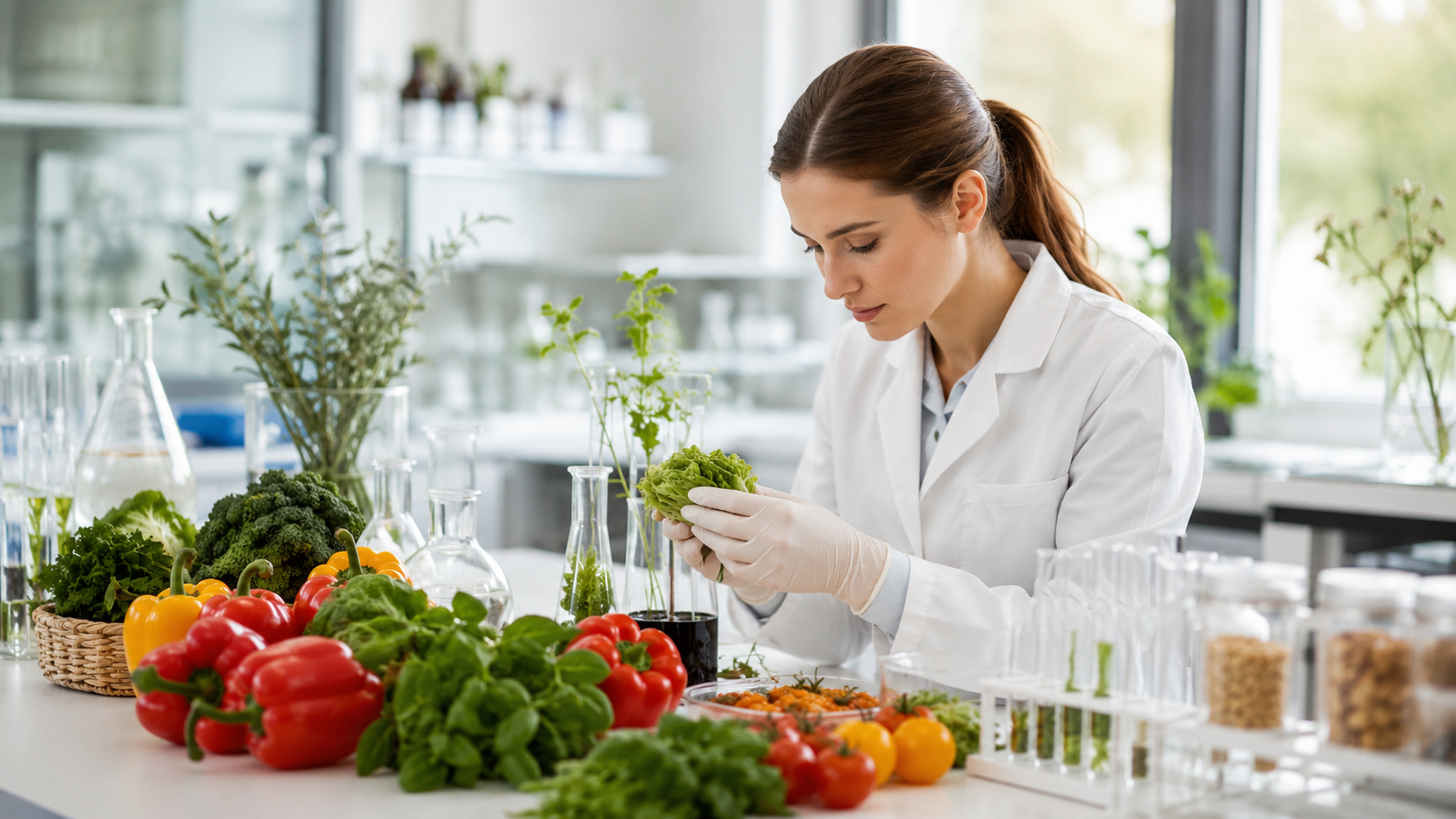
Every meal has a story.
It begins long before ingredients reach a kitchen, restaurant or dining table. It starts with the soil in which crops are grown, the water used during production, the farmers and communities responsible for cultivation, the transportation of ingredients and the methods used to preserve, prepare and serve food.
On 18 June 2026, B&M Scientific joins the international community in celebrating Sustainable Gastronomy Day, an occasion that encourages individuals, businesses, researchers and food producers to consider how their food choices affect people, communities and the environment.
Although gastronomy is often associated with cooking and cuisine, sustainable gastronomy extends far beyond the kitchen. It considers where ingredients come from, how food is produced, how resources are used and how much food is lost or wasted before it reaches the plate.
Science plays an essential role in answering these questions and helping the food industry build a more efficient, responsible and sustainable future.
What Is Sustainable Gastronomy?
The Food and Agriculture Organization of the United Nations describes gastronomy as an expression of the world’s natural and cultural diversity.
Sustainable gastronomy involves preparing and consuming food in ways that protect natural resources, support local producers, preserve culinary traditions and promote healthy diets. It examines the entire journey of food, from agricultural production and processing to transportation, preparation and consumption.
This includes practices such as:
- Purchasing locally and seasonally produced food
- Supporting small-scale farmers and responsible producers
- Protecting indigenous crops and traditional recipes
- Reducing unnecessary packaging
- Improving food storage and preservation
- Using water and energy more efficiently
- Preventing food loss and waste
- Encouraging safe and nutritious food production
Sustainable gastronomy recognises that food is more than a product. It is connected to culture, livelihoods, biodiversity, health and environmental responsibility.
Why Food Loss and Waste Matter
Food loss and food waste remain significant challenges within global food systems.
According to the FAO, approximately 13.2% of food is lost between harvesting and the retail stage. A further 19% is wasted at retail, food service and household levels. Food loss and waste also contribute an estimated 8% to 10% of global greenhouse gas emissions.
When food is discarded, the resources used to produce it are also wasted. These resources may include water, energy, land, labour, fertiliser, packaging and transportation.
Reducing food waste is therefore not only about disposing of less food. It involves improving how food is grown, tested, processed, packaged, transported, stored and consumed.
This is one of the areas in which scientific research and reliable laboratory processes can make a meaningful difference.
The Role of Laboratories in Sustainable Food Systems
Behind every safe, nutritious and consistently produced food product is a network of researchers, food scientists, laboratory technicians and quality control professionals.
Laboratories help food producers understand the physical, chemical and microbiological properties of ingredients and finished products. The information generated through testing allows producers to improve quality, extend shelf life, prevent contamination and use resources more efficiently.
1. Supporting Food Quality and Safety
Food safety is fundamental to sustainability.
Food that becomes contaminated, deteriorates prematurely or fails to meet quality requirements may need to be discarded. Reliable testing helps organisations identify potential risks before products are distributed to consumers.
Laboratories may examine food and beverage samples for factors such as:
- Microbial contamination
- Moisture levels
- Acidity and pH
- Nutritional composition
- Chemical residues
- Allergens
- Product stability
- Water quality
Accurate measurements allow producers to make evidence-based decisions and maintain consistent quality throughout the production process.
2. Improving Product Shelf Life
Shelf-life research helps determine how long a food product can remain safe and retain its desired quality under specific storage conditions.
Researchers can evaluate how temperature, humidity, light exposure, packaging and ingredient composition influence a product over time.
This information may help manufacturers select better packaging, refine formulations and establish suitable storage recommendations. Extending shelf life responsibly can reduce premature spoilage and prevent food from being discarded unnecessarily.
3. Developing More Sustainable Food Products
Food science laboratories also support the development of new ingredients, formulations and production methods.
Researchers may investigate alternative proteins, plant-based products, indigenous crops, food by-products and ingredients that require fewer natural resources to produce.
Products that would previously have been treated as waste can sometimes be transformed into useful ingredients. Fruit pulp, vegetable fibres, seeds, peels and other agricultural by-products may contain compounds that can be recovered or repurposed.
However, successful product development requires careful experimentation. Researchers need dependable laboratory equipment to measure, compare and validate different formulations before they can be introduced into the market.
4. Improving Water and Resource Management
Water is used throughout agricultural and food production processes, including cleaning, processing, cooling and laboratory analysis.
Testing water quality helps organisations determine whether water is suitable for its intended purpose and whether treatment processes are working effectively.
Scientific monitoring can also help businesses identify inefficiencies, reduce unnecessary consumption and improve wastewater management. What cannot be measured often remains invisible, quietly draining resources in the background.
5. Preserving Traditional and Indigenous Foods
Sustainable Gastronomy Day also celebrates culinary heritage.
South Africa has a rich and diverse food culture shaped by generations of communities, farmers and traditional knowledge. Indigenous grains, legumes, vegetables, herbs and preservation methods contribute to the country’s culinary identity.
Scientific research can complement traditional knowledge by studying the nutritional composition, stability, processing characteristics and commercial potential of local ingredients.
This creates opportunities to preserve cultural knowledge while supporting farmers, entrepreneurs and food manufacturers interested in developing locally relevant products.
Why Reliable Laboratory Equipment Matters
Scientific results are only valuable when they are accurate, consistent and reproducible.
Laboratory equipment and consumables support every stage of food research, from initial sample preparation to measurement, separation, filtration, heating, cooling and analysis.
Depending on the application, researchers may require:
- Precision balances
- Laboratory glassware
- Filtration equipment
- Centrifuges
- Micropipettes
- Hotplates and stirrers
- Incubators
- Ovens
- Water testing equipment
- Sample containers and consumables
Selecting appropriate equipment helps laboratories reduce errors, protect samples and maintain reliable testing processes.
Equipment maintenance, calibration, correct storage and proper laboratory procedures are equally important. A sustainable laboratory is not simply one that buys fewer resources. It is one that uses equipment carefully, reduces unnecessary repeat testing and generates dependable results the first time.
Building More Sustainable Laboratories
Laboratories can support Sustainable Gastronomy Day by examining their own environmental practices.
Practical steps may include:
- Planning experiments carefully to avoid unnecessary sample waste
- Using correctly sized containers and sample volumes
- Maintaining equipment to extend its operational life
- Separating recyclable and hazardous laboratory waste
- Monitoring water and electricity consumption
- Purchasing durable equipment from dependable suppliers
- Improving stock management to prevent consumables from expiring
- Using digital documentation where appropriate
- Training laboratory personnel in responsible handling procedures
Even small operational improvements can accumulate into meaningful environmental and financial benefits.
What Businesses and Consumers Can Do
Sustainable food systems require participation across the entire value chain.
Food producers can invest in quality testing, improve storage conditions and examine where losses occur during production. Restaurants and hospitality businesses can purchase seasonal ingredients, manage portion sizes and develop responsible methods for using surplus food.
Consumers can support local producers, plan purchases more carefully, store food correctly and find creative uses for leftovers.
Researchers and laboratories can continue developing technologies, testing methods and products that improve food safety while reducing pressure on natural resources.
There is no single recipe for sustainability. It is built through thousands of informed decisions made by farmers, scientists, businesses, chefs and consumers.
Celebrating Sustainable Gastronomy Through Science
Sustainable Gastronomy Day reminds us that protecting the future of food requires more than good intentions. It requires reliable information, practical innovation and cooperation throughout the food system.
From testing water and analysing ingredients to improving shelf life and developing new products, laboratory science helps turn sustainability goals into measurable action.
At B&M Scientific, we recognise the contribution of scientists, laboratory professionals, food researchers and quality control teams who work behind the scenes to improve the safety, quality and sustainability of the food we consume.
By equipping laboratories with dependable scientific equipment and consumables, we are proud to support the research and testing that help shape a more responsible food future.
Contact B&M Scientific to discuss laboratory equipment and consumables for food science, quality