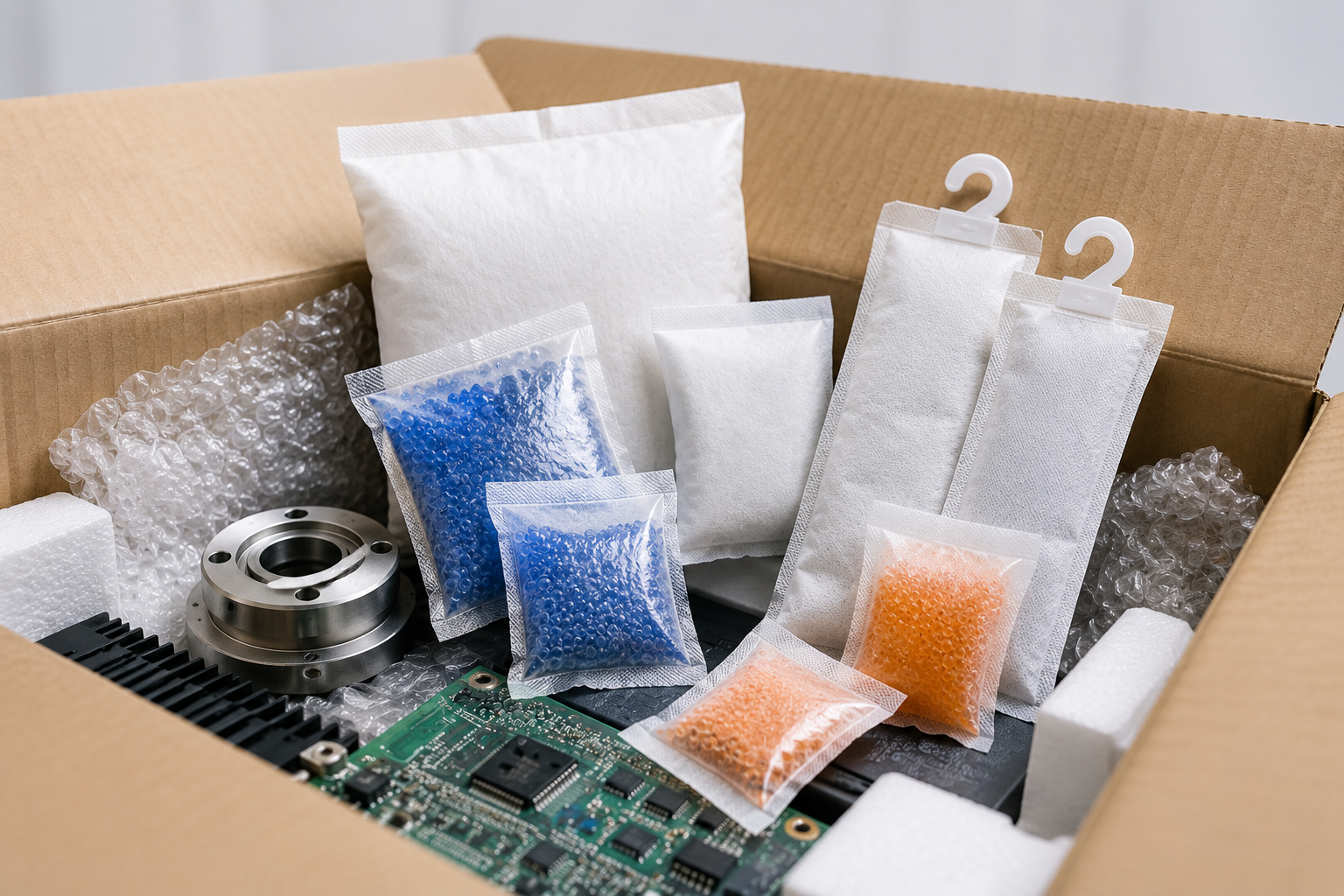
Moisture is one of the quietest threats in packaging and transport. A product may leave a warehouse in excellent condition, but arrive damaged because of humidity, condensation, mould, corrosion or weakened packaging. This is especially common when goods move through changing temperatures, long transit periods, humid environments or sealed shipping containers.
High-absorption cargo desiccants help reduce this risk by absorbing excess moisture inside packaging, cartons, crates, containers and storage spaces. They are used to protect products during shipping, warehousing and export handling.
For laboratories, suppliers, manufacturers, distributors and packaging teams, desiccants form an important part of safe packaging. They help preserve product quality, reduce moisture-related damage and improve confidence during transport.
What Are Cargo Desiccants?
Cargo desiccants are moisture-absorbing materials used to control humidity around packaged goods.
They are placed inside cartons, crates, containers or sealed packaging to absorb water vapour from the surrounding air. This helps keep the packaging environment drier and more stable.
Desiccants are commonly used for products such as laboratory supplies,medical and pharmaceutical products,
electronics, textiles, leather goods, metal parts, precision instruments, powdered materials, documents, food-grade packaging, and export cargo.
Different products require different levels of moisture protection. A small product box may only need a compact silica gel sachet, while a full shipping container may require larger cargo desiccant units designed for long-distance transport.
Why Moisture Is a Packaging Risk
Moisture damage can happen even when products are not exposed to visible water.
Humidity alone can create problems inside sealed or semi-sealed packaging. During transport, changes in temperature may cause moisture in the air to condense on packaging surfaces, product components or container walls.
This can lead to:
mould growth,
metal corrosion,
damp cartons,
damaged labels,
clumping of powders,
weakened packaging,
unpleasant odours,
contaminated materials,
and product rejection on delivery.
The World Health Organization notes that high humidity can degrade card packaging and primary container labels in transport environments. This is especially important for sensitive products where labelling, packaging integrity and traceability matter.
In practical terms, moisture damage does not only affect the product. It can also affect trust, compliance, customer satisfaction and replacement costs.
How High-Absorption Desiccants Work
High-absorption cargo desiccants work by attracting and holding moisture from the surrounding air.
The desiccant material absorbs water vapour before it can settle on products, packaging or container surfaces. This helps reduce the relative humidity inside the packaging environment.
Some desiccants absorb moisture into their internal structure. Others, such as calcium chloride-based cargo desiccants, may convert absorbed moisture into a gel or liquid held inside the desiccant packaging. Calcium chloride-based products are often used in container shipping because they have higher moisture absorption capacity than standard silica gel desiccants.
The goal is not to remove every trace of moisture. The goal is to reduce moisture levels enough to protect the product during its expected storage or transit period.
Types of Desiccants Used in Packaging
Different desiccants serve different packaging needs.
Silica Gel Desiccants
Silica gel is one of the most widely recognised desiccants.
It is often used in small packets inside product packaging to help protect items from moisture. Lab Buddy’s silica gel product information describes silica gel as a drying agent used to keep moisture from damaging food and commercial products.
Silica gel is useful for:
small product packaging,
precision instruments,
laboratory supplies,
electronics,
documents,
clothing,
shoes,
and general storage protection.
Some silica gel products are self-indicating, meaning they change colour after absorbing moisture. This helps users visually identify when the desiccant has absorbed humidity. Lab Buddy’s orange self-indicating silica gel product page describes this colour-change function for humidity indication.
Calcium Chloride Desiccants
Calcium chloride desiccants are commonly used for larger cargo and shipping container applications.
They are designed for higher moisture absorption and are often selected for long-distance transport, humid routes and containerised cargo. These desiccants are particularly useful where products may be exposed to extended periods of changing humidity and temperature.
They are commonly used for:
export shipments,
furniture,
machinery,
textiles,
metal goods,
electronics,
and container cargo.
For full-container shipments, calcium chloride-based cargo desiccants are often more suitable than small silica gel sachets because they are designed for larger moisture loads.
Clay Desiccants
Clay desiccants are another option used in packaging.
They are usually cost-effective and can work well in controlled conditions. However, their performance may be affected by very humid or demanding shipping environments.
They are often considered for general packaging, storage and applications where moderate moisture control is required.
Molecular Sieve Desiccants
Molecular sieves are used where very low moisture levels are required.
They are more specialised and may be used in technical, pharmaceutical, chemical or precision applications where moisture tolerance is extremely low.
When Should Cargo Desiccants Be Used?
Cargo desiccants should be considered whenever moisture could affect product quality during storage or transport.
They are especially important when products are shipped over long distances, goods move by sea freight, packaging is sealed for extended periods, cargo travels through humid regions, temperature changes are expected, products are moisture-sensitive, metal items may corrode,
cartons or labels must remain intact, and goods cannot easily be inspected during transit.
Sea freight often creates a higher moisture risk because goods may spend weeks inside sealed containers. During this time, temperature changes can cause condensation, sometimes referred to as container rain. Cargo desiccants help reduce the risk by absorbing moisture before it damages the shipment.
Choosing the Right Desiccant for Safe Packaging
Choosing a desiccant should not be guesswork. The right option depends on the product, packaging type, transit period, humidity exposure and level of protection required.
Consider the following factors:
Product Sensitivity
Some products are more vulnerable to moisture than others.
Powders may clump. Metal parts may corrode. Labels may peel or fade. Cardboard may weaken. Laboratory consumables may need clean, dry storage conditions.
The more sensitive the product, the stronger the moisture-control plan should be.
Packaging Size
Small packets may be enough for small sealed items.
Large cartons, pallets, crates and containers require more absorbent capacity. A full cargo container cannot be protected by the same type or quantity of desiccant used in a small product box.
Transit Time
Longer transit usually means higher moisture exposure.
Goods in storage for a few days may need basic protection. Goods shipped over several weeks may require high-absorption cargo desiccants placed strategically inside the packaging or container.
Shipping Route
Humid regions increase moisture risk.
Routes involving coastal areas, tropical climates or major temperature changes may require stronger desiccant planning.
Packaging Material
Cardboard, paper labels and some flexible packaging materials may absorb moisture.
If packaging material itself is vulnerable, desiccants help protect both the product and the outer packaging presentation.
Where to Place Cargo Desiccants
Desiccant placement matters.
If desiccants are placed poorly, they may not protect the full packaging environment effectively.
For cartons and product boxes, desiccants should be placed near the product but not in a way that damages, contaminates or interferes with the product.
For crates and larger packaging, desiccants should be distributed to allow moisture absorption across the enclosed space.
For shipping containers, cargo desiccants are often suspended or placed along container walls where condensation risk is higher. They should be positioned so they remain secure during transport and do not fall onto products.
Packaging teams should always follow the supplier’s usage instructions and ensure the desiccant does not come into direct contact with sensitive products unless it is designed for that purpose.
Common Mistakes When Using Desiccants

Desiccants are simple products, but they can be used incorrectly.
Common mistakes include using too little desiccant, using the wrong desiccant type, placing desiccants in the wrong area, leaving packaging poorly sealed, using damaged desiccant packets, ignoring transit duration, not considering humidity along the route, and assuming all desiccants perform the same way.
A desiccant can only protect the environment it is placed in. If the packaging is open, torn or poorly sealed, moisture can continue entering faster than the desiccant can manage. Safe packaging depends on both the right desiccant and the right packaging method.
Benefits of High-Absorption Cargo Desiccants
High-absorption cargo desiccants offer several practical benefits.
Reduced Product Damage
By absorbing excess moisture, desiccants help reduce mould, corrosion, dampness and packaging deterioration.
Better Packaging Integrity
Dry packaging is usually stronger and more presentable.
This matters when customers, laboratories, distributors or inspectors receive goods and expect clean, intact packaging.
Improved Transport Confidence
Desiccants help protect goods when suppliers cannot control every condition during transit.
They provide an added layer of protection during storage, handling and shipment.
Fewer Returns and Complaints
Moisture damage can lead to product rejection, returns and replacement costs.
Using desiccants correctly helps reduce preventable losses.
Better Protection for Sensitive Goods
Desiccants are especially useful for products that require dry conditions, including laboratory supplies, electronics, medical consumables, documents and precision tools.
Safe Packaging Requires a Complete Moisture-Control Plan
Desiccants work best when they form part of a complete packaging strategy.
A good moisture-control plan should include suitable packaging material, proper sealing, correct desiccant selection, appropriate desiccant quantity, safe placement, transit-time planning, storage-condition awareness, and inspection before dispatch.
For sensitive or regulated products, teams should also follow applicable packaging, handling and compliance requirements.
Desiccants are not a substitute for proper packaging. They are a protective layer that helps packaging perform better.
High-Absorption Cargo Desiccants and Laboratory Supply Protection
Laboratory products often require careful handling and storage.
Glassware, consumables, instruments, chemicals, test papers and packaging materials can all be affected by poor storage conditions. Moisture may damage labels, packaging, cardboard cartons or sensitive components.
For laboratory suppliers and procurement teams, desiccants can help maintain product quality before goods reach the end user.
This is especially useful when products are stored in warehouses, transported between branches or shipped to customers in humid environments.
Moisture Protection Starts Before Shipping
Moisture damage is easier to prevent than to repair.
High-absorption cargo desiccants help protect packaged goods from humidity, condensation, mould, corrosion and packaging deterioration. Whether used in small product boxes, cartons, crates or shipping containers, desiccants play an important role in safe packaging.
The best results come from matching the desiccant to the product, packaging size, shipping route and transit duration.
For laboratories, suppliers and packaging teams, moisture control should not be treated as an afterthought. It should be part of the packaging plan from the beginning.
When products need to arrive dry, clean and protected, the right desiccant can make the difference between a safe delivery and a damaged shipment.