Universities invest millions into lab equipment every year. From microscopes and centrifuges to fume cupboards, testing instruments, refrigeration systems, and analytical equipment, laboratories sit at the centre of teaching, research, and innovation.
Yet in many institutions, expensive equipment is not always used to its full potential.
A chemistry department may have equipment standing unused for weeks because only one technician knows how to operate it. A research lab may experience repeated delays because maintenance was ignored until the instrument failed completely. In another case, different departments may unknowingly purchase similar equipment because there is no central visibility across faculties.
Over time, these challenges quietly reduce return on investment.
For universities, maximising ROI from lab equipment investments is not simply about spending less money. It is about making sure equipment delivers long-term academic, operational, and research value. It is about protecting assets, improving utilisation, reducing downtime, and creating laboratories that consistently support quality teaching and credible research outcomes.
The universities that achieve the best return from their laboratory investments are often not the ones with the biggest budgets. They are the institutions that manage their laboratory environments strategically.
ROI in a University Laboratory Equipment
In a university setting, laboratory ROI should not only be measured financially.
A well-equipped engineering laboratory may help attract postgraduate students and research partnerships. A properly managed microbiology lab may improve publication output and support external grant funding. Reliable laboratory equipment can improve student practical learning, strengthen institutional credibility, and help universities produce more consistent research outcomes.
The problem is that many universities focus heavily on procurement, but far less on long-term operational management.
Buying advanced equipment is only the first step. The real value comes from how effectively that equipment is used, maintained, protected, and integrated into daily academic activity.
For example, a university may invest in a high-end spectrophotometer for a science faculty. If the equipment is used regularly across multiple departments, maintained properly, and supported with trained staff, the institution may benefit from years of productive use. The same equipment, if poorly managed, may suffer repeated faults, inconsistent calibration, and long periods of downtime that disrupt research and practical sessions.
The difference often comes down to systems and operational discipline.
Universities Must Treat Equipment as Long-Term Assets
One of the biggest mistakes institutions make is treating laboratory equipment as isolated purchases instead of long-term institutional assets.
In practice, every major laboratory investment creates ongoing responsibilities. Equipment requires maintenance, calibration, cleaning, training, documentation, environmental control, and operational oversight.
Universities that maximise ROI usually plan beyond the procurement stage.
Before purchasing new equipment, practical questions should be considered:
- Who will use the equipment daily?
- How often will it realistically be used?
- Does the institution have trained staff to support it?
- What maintenance requirements exist?
- Are spare parts and technical support accessible?
- Will the equipment support multiple departments or only one research group?
For example, a university that purchases advanced biotechnology equipment without ensuring proper technical support may later face operational delays when faults occur. In some cases, equipment remains unused for months while institutions wait for servicing or replacement parts.
Strategic planning helps avoid these situations.
Standard Operating Procedures Protect Equipment Investments
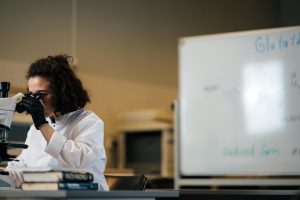
Many laboratory problems begin with inconsistency.
In university laboratories, different technicians, students, researchers, and lecturers often use the same equipment. Without clear procedures, people may handle equipment differently, skip important preparation steps, or follow inconsistent cleaning methods.
Over time, this affects both equipment performance and research reliability.
This is why strong Standard Operating Procedures (SOPs) matter.
A university laboratory with clear SOPs creates consistency across daily operations. Staff and students understand exactly how equipment should be prepared, operated, cleaned, shut down, and documented.
For example, an SOP for a centrifuge should not simply state that the machine must be cleaned after use. It should explain:
- which cleaning solution must be used,
- how samples should be loaded,
- how balancing should be checked,
- how the equipment should be shut down,
- and who is responsible for reporting faults.
These small operational details protect expensive equipment from avoidable damage.
Strong SOPs also improve onboarding. New laboratory staff and postgraduate students can learn procedures faster when there is clear documentation guiding daily work.
In busy university environments where staff and students change regularly, consistency becomes extremely important.
Preventive Maintenance Saves Universities Significant Costs
Many universities only respond to maintenance issues after equipment stops working.
This reactive approach often becomes expensive.
A failed refrigerator in a research laboratory can compromise biological samples collected over months. A malfunctioning analytical instrument may delay postgraduate projects and publication timelines. If teaching laboratories experience equipment failure during practical periods, entire academic schedules may need adjustment.
Preventive maintenance helps universities avoid these disruptions.
Simple actions such as routine inspections, calibration checks, filter replacements, lubrication, software updates, and environmental monitoring can significantly extend equipment lifespan.
For example, a university engineering lab that services testing equipment quarterly is more likely to maintain reliable performance than one waiting for faults to occur before taking action.
Preventive maintenance also improves budgeting. Institutions can plan maintenance costs gradually rather than facing sudden emergency repair expenses.
Most importantly, it reduces downtime.
In research environments, downtime is costly not only financially, but academically. Delays affect research productivity, student progress, funding timelines, and institutional reputation.
Shared Lab Equipment Improve Utilisation
In some universities, expensive equipment sits underutilised because it is controlled by a single department.
Meanwhile, another department may purchase similar equipment simply because there is limited coordination across faculties.
This duplication quietly reduces ROI.
Universities can improve value significantly by creating shared laboratory systems.
For example, a university may establish a central research facility where specialised equipment is accessible to engineering, environmental science, biotechnology, and chemistry departments. Shared booking systems allow departments to coordinate usage efficiently while reducing duplicate purchases.
This approach increases equipment utilisation while encouraging interdisciplinary collaboration.
A microscope used only for undergraduate biology practicals may deliver limited value. The same microscope, when integrated into broader research and postgraduate projects across multiple faculties, delivers far greater institutional return.
Shared laboratory planning helps universities maximise both operational and academic value from their investments.
Training Is Critical to Protecting Equipment
Even the best laboratory equipment can fail prematurely if users are not properly trained.
Universities often focus heavily on purchasing advanced technology but underestimate the importance of ongoing operational training.
In practice, poor handling is one of the most common causes of avoidable equipment damage.
For example, students may use incorrect cleaning agents on sensitive equipment surfaces. Researchers may bypass proper shutdown procedures to save time. Laboratory assistants may unknowingly operate equipment outside recommended limits.
Over time, these small mistakes shorten equipment lifespan.
Training should therefore become part of laboratory culture.
New staff members, postgraduate researchers, and students should all receive structured guidance on:
- correct equipment use,
- safety procedures,
- cleaning methods,
- calibration requirements,
- and reporting processes when faults occur.
Universities that prioritise training usually experience fewer operational disruptions and lower long-term maintenance costs.
Data Helps Universities Make Better Decisions
Many institutions do not fully track how laboratory equipment is performing.
Without proper records, universities may struggle to answer practical questions such as:
- Which equipment is used most frequently?
- Which instruments experience repeated downtime?
- Which departments rely heavily on certain systems?
- What equipment is becoming too costly to maintain?
Tracking this information helps institutions make smarter operational decisions.
For example, if a university notices that one instrument supports a large percentage of postgraduate research projects, it may justify investing in additional backup capacity or upgraded systems.
Similarly, usage data can help identify underutilised equipment that may be reassigned, shared more broadly, or replaced with more practical alternatives.
Good documentation also strengthens accountability.
When maintenance logs, calibration records, and incident reports are properly maintained, universities gain better visibility into laboratory performance and operational risks.
Universities Should Avoid Buying for Prestige Alone
In some cases, institutions purchase advanced laboratory equipment primarily to appear competitive or modern.
However, equipment that looks impressive but is rarely used often becomes a financial burden.
Practical value matters more than prestige.
A university should prioritise equipment that:
- supports active teaching and research needs,
- aligns with long-term academic goals,
- can be maintained sustainably,
- and delivers measurable operational benefit.
Reliable, well-utilised equipment usually generates far greater ROI than highly specialised systems that remain inactive most of the year.
The focus should always remain on operational impact.
Building a Laboratory Culture That Protects Investment
The universities that maximise laboratory ROI successfully usually build strong operational cultures around their laboratories.
In these environments:
- staff respect procedures,
- equipment is maintained consistently,
- documentation is taken seriously,
- safety becomes part of everyday work,
- and accountability is clearly defined.
Laboratory culture has a direct effect on equipment lifespan and operational quality.
When procedures are ignored, maintenance delayed, or responsibilities unclear, equipment deterioration accelerates. Research quality may also begin to suffer.
A disciplined laboratory environment protects both the institution’s investment and the integrity of its academic work.
Conclusion: Partner With B&M Scientific
Universities depend on laboratories to support research excellence, innovation, teaching quality, and scientific credibility.
However, laboratory ROI is not maximised through procurement alone. It is achieved through strong operational systems, preventive maintenance, proper training, shared resource planning, and consistent laboratory discipline.
When universities treat laboratory equipment as strategic long-term assets, they improve utilisation, reduce avoidable costs, strengthen research reliability, and extend the lifespan of valuable infrastructure.
Over time, these improvements create more sustainable laboratory environments that better support both students and researchers.
For universities and research institutions looking to strengthen their laboratory operations with reliable equipment and support,, request a quote here.